
The Decision That Happens Before the Unit Ever Turns On
Long before a new AC or heat pump ever runs its first cycle, someone has to decide exactly where the outdoor condenser sits. That decision gets made quickly on plenty of installations, wherever there is a flat pad or an obvious open spot near the electrical panel, and it is rarely revisited once the unit is in place. Placement affects how efficiently the system runs, how much noise reaches a neighboring window, how easy the unit is to service years down the line, and in a lot of West Los Angeles properties, whether the installation is even allowed to proceed without approval from an HOA or building management. Getting placement right the first time avoids problems that are genuinely difficult and expensive to fix once the unit is set and connected.
Airflow Clearance Is Not Optional
A condenser rejects heat by pulling outdoor air across its coil and pushing it back out the top or side, depending on the unit's design. If that airflow is restricted, whether by a fence built too close, dense landscaping, or a unit tucked into a tight side yard with walls on multiple sides, the condenser cannot reject heat efficiently and has to work harder to do the same job. In Brentwood, where larger lots often come with dense landscaping planned around the house rather than around the mechanical equipment, we frequently find condensers installed years ago that are now half buried in overgrown shrubs, quietly losing efficiency as the plants around them filled in. Manufacturer specifications call for defined clearance on every side of the unit, and we plan placement around those clearances from the start rather than treating them as a suggestion.
Noise Travels Differently Than People Expect
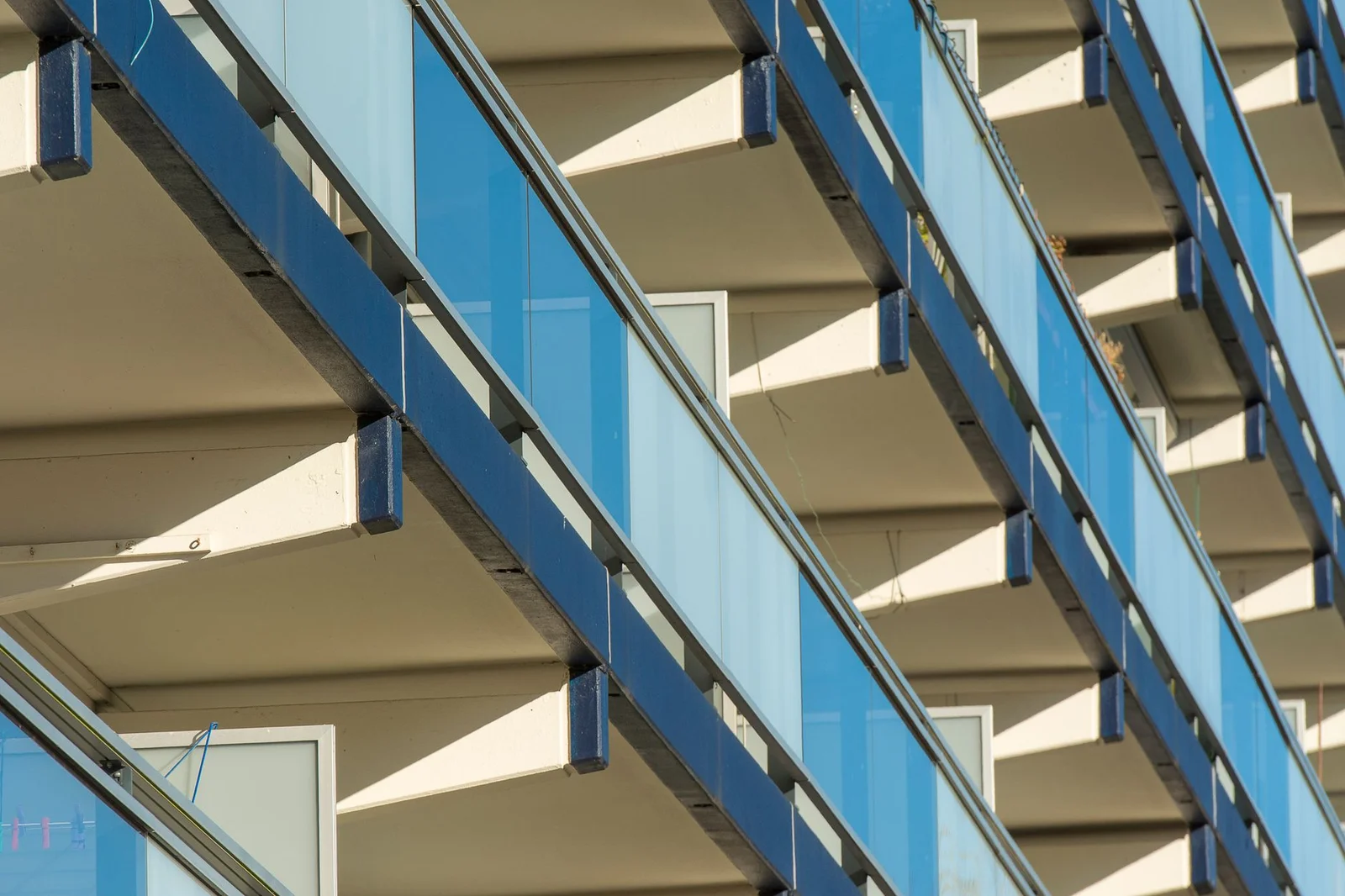
Condensers produce a steady mechanical hum that is rarely loud up close but carries differently depending on what surrounds it. A unit placed against a stucco wall between two homes in a tight Culver City side yard can bounce sound toward a bedroom window on the neighboring property in a way that would not happen if the same unit sat a few feet further from the wall or angled differently. Century City condo balconies present a similar issue at a smaller scale: a condenser mounted a few feet from a shared wall can be more noticeable inside a neighboring unit than the decibel rating on the spec sheet would suggest, because sound reflects off hard balcony surfaces in ways an open yard installation does not experience. We think about what sits on the other side of a wall, not just what sits in front of the unit, before finalizing a location.
Sun Exposure Affects Performance More Than People Realize
A condenser working to reject heat into already hot surrounding air has to work harder than one placed somewhere with better airflow and less direct radiant heat gain. A unit installed against a west facing stucco wall in West LA or Cheviot Hills absorbs the wall's stored heat through the afternoon on top of the ambient outdoor temperature, right at the time of day, during a Santa Ana event, when the system needs to perform at its best. Where possible, we favor placement with some shade or at least airflow separation from a heat absorbing surface, without blocking service access or violating setback requirements.
Service Access Matters for the Life of the System
A condenser placed for convenience during installation can become a real problem the first time it needs a repair or its annual maintenance visit. Units tucked behind fences with no gate, mounted on brackets in tight side yards with barely enough room to open an access panel, or placed where a technician has to move landscaping equipment just to reach the unit all add time and difficulty to routine service. We plan for a technician's access needs years down the line, not just the day of installation, because a unit that is hard to service tends to get serviced less often, and less frequent maintenance is exactly what leads to the kind of neglected systems that fail during the first real heat spike of the season.
HOA and Condo Placement Rules in Century City
Century City condo and townhome installations add a layer that a single family home in Cheviot Hills or Brentwood does not usually face: most buildings require HOA or building management approval before a condenser goes anywhere, and many have specific rules about where units can be mounted, what screening or enclosure is required, and how noise levels are evaluated. Placement on a shared rooftop sometimes requires architectural committee sign-off and coordination for equipment access. We build documentation, including manufacturer specifications and clearance requirements, into the process for any condo installation so a homeowner has what they need for HOA approval before work begins, rather than discovering a placement conflict partway through the project.
Hillside Properties in Brentwood Change the Calculation
A Brentwood property built into a slope sometimes has limited flat, accessible ground near the home at all, which narrows placement options considerably. In these cases we look at whether a wall mounted bracket, a small elevated platform, or a location slightly further from the house with a longer line set makes more sense than forcing the unit into a spot that technically has room but creates drainage, access, or clearance problems. A longer line set adds a modest cost to the installation but is often the better answer than compromising on clearance or service access just to keep the run short.
Ground Level Pads: Getting the Foundation Right
For homes with a straightforward yard installation, the pad the condenser sits on matters more than it might seem. A pad that is not level causes the unit to vibrate unevenly, which increases wear on internal components and can loosen refrigerant line connections over time. A pad set directly on soil without proper base preparation can settle unevenly after a rainy season, tilting the unit gradually in a way that is easy to miss until vibration or drainage problems show up. We prepare a proper, level base as part of any ground mounted installation rather than setting a pad directly on unprepared ground.
Planning Placement Before the Rest of the Installation
Placement decisions ripple into the rest of an installation: line set routing, electrical disconnect location, and how much refrigerant the system needs all depend on where the condenser ends up relative to the indoor equipment. We walk the property and talk through placement options before finalizing an installation plan for any West LA, Cheviot Hills, Brentwood, Century City, or Culver City home, because a location chosen for convenience on installation day can create ongoing performance, noise, or access problems that outlast the installation itself.
When a Property Needs More Than One Outdoor Unit
Larger Brentwood homes with multi-zone systems, or properties adding a ductless system alongside an existing central AC, sometimes end up with more than one outdoor unit on the same property. In these cases, placement planning has to account for how the units interact, spacing them so neither one recirculates the warm exhaust air of the other, which reduces both units' efficiency if they are placed too close together facing the same direction. We also stagger service access paths so a technician can reach either unit without needing to work around the other, and we group electrical disconnects logically rather than scattering them across the yard in whatever order the units happened to go in.
Coordinating Placement With Landscaping and Future Plans
A placement decision that looks fine on installation day can become a problem a few years later if a homeowner's landscaping plans were never part of the conversation. We ask about planned fences, planting beds, or hardscape projects before finalizing a location, because a condenser placed in what is currently open yard space can end up boxed in by a new fence line or a mature hedge within a few seasons if nobody accounted for it. A short conversation about future plans at the time of installation avoids a costly relocation later, when the unit is already connected and running.
Getting It Right Before the Unit Is Set
Once a condenser is set on its pad or bracket and connected, moving it is a significant undertaking, not a quick adjustment. Call (877) 549-6691 and we will walk your property with you, whether it is a Cheviot Hills side yard, a Brentwood hillside lot, or a Century City balcony, and talk through placement before anything is installed.
Need Professional HVAC Service?
Our HVAC-experienced technicians are ready to help with all your AC and heating needs. Contact Westside AC Repair today for expert service throughout the the 405 corridor service area.


